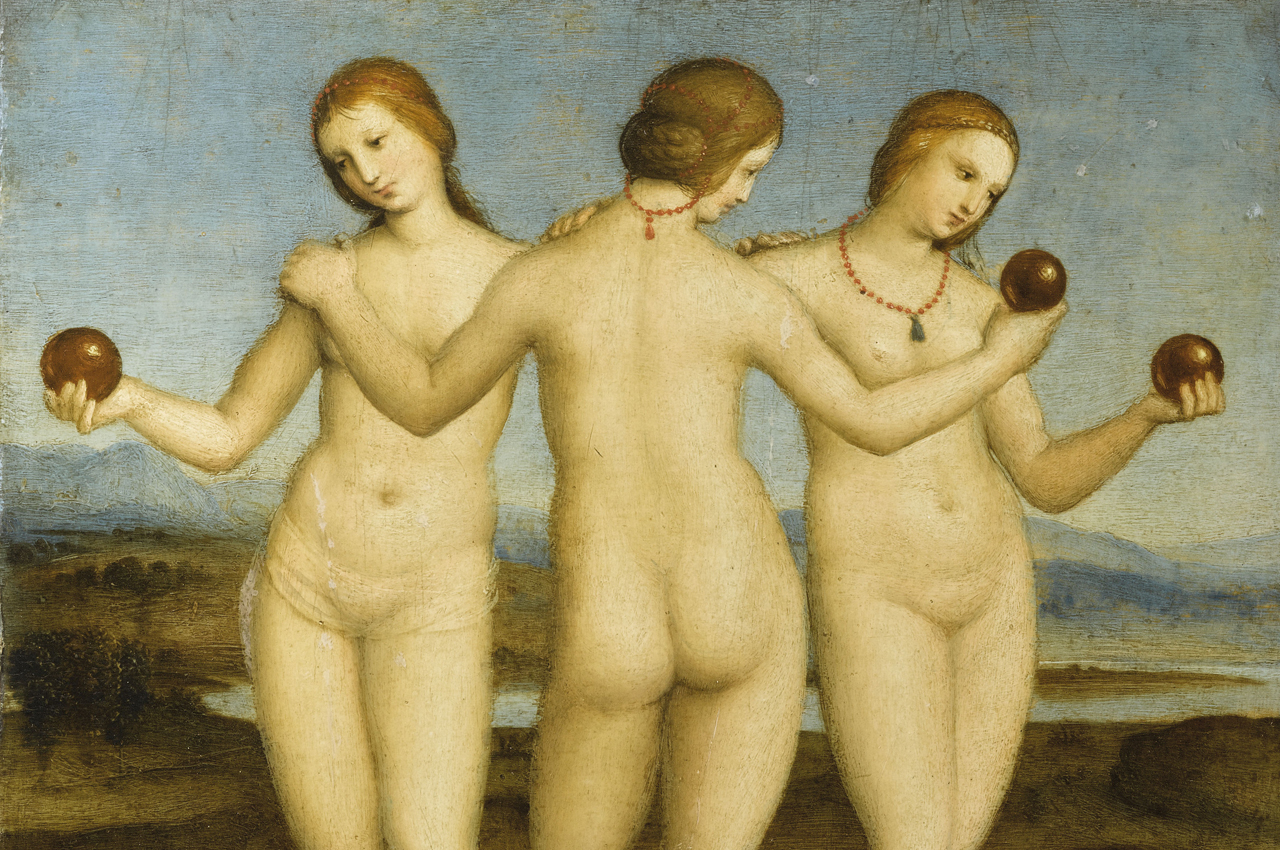
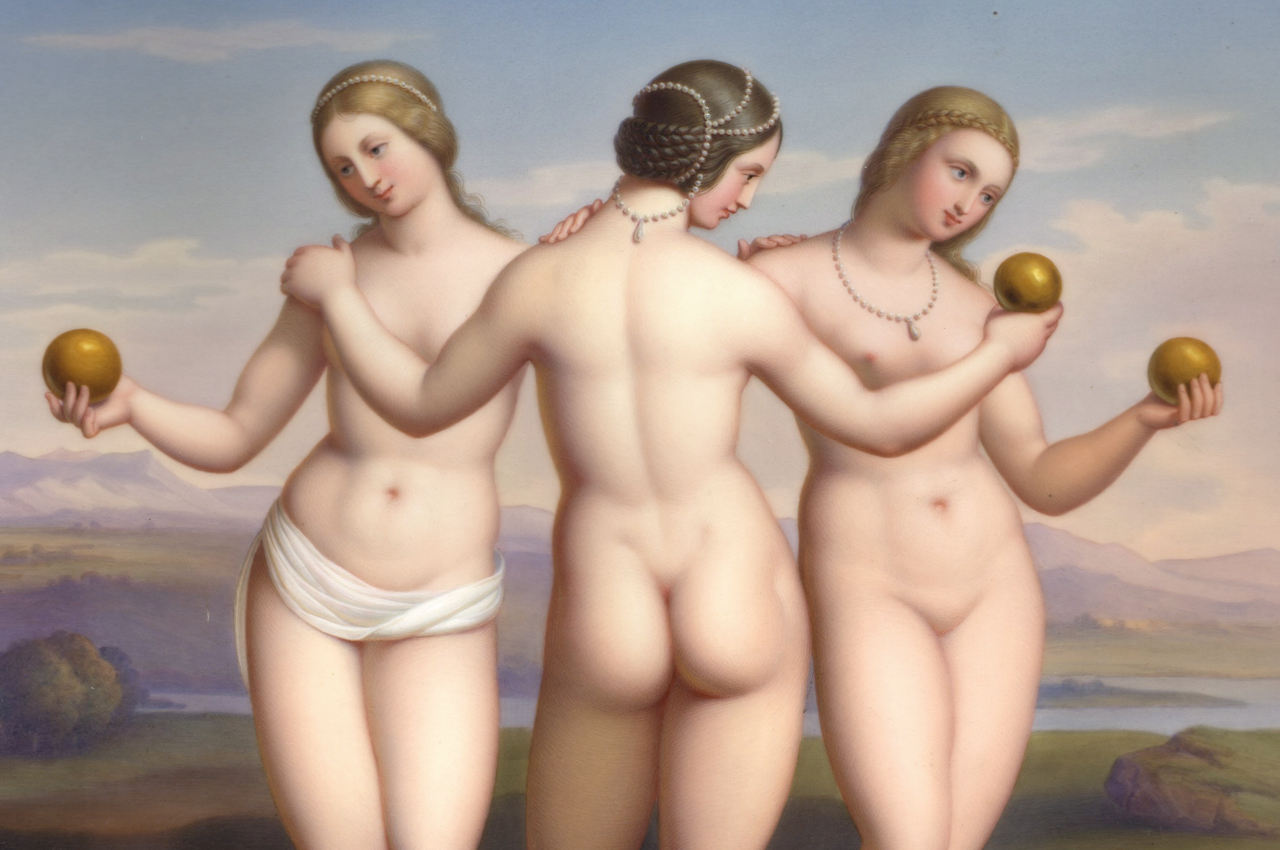
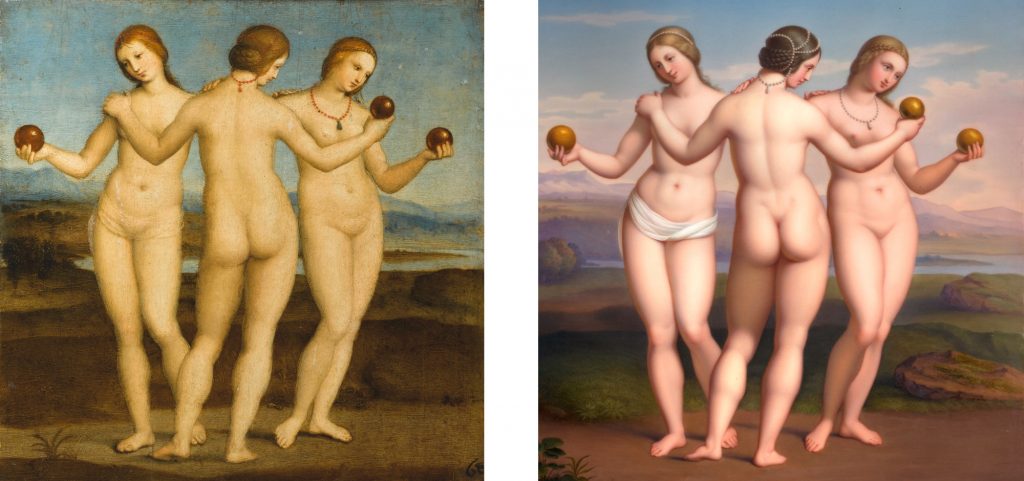
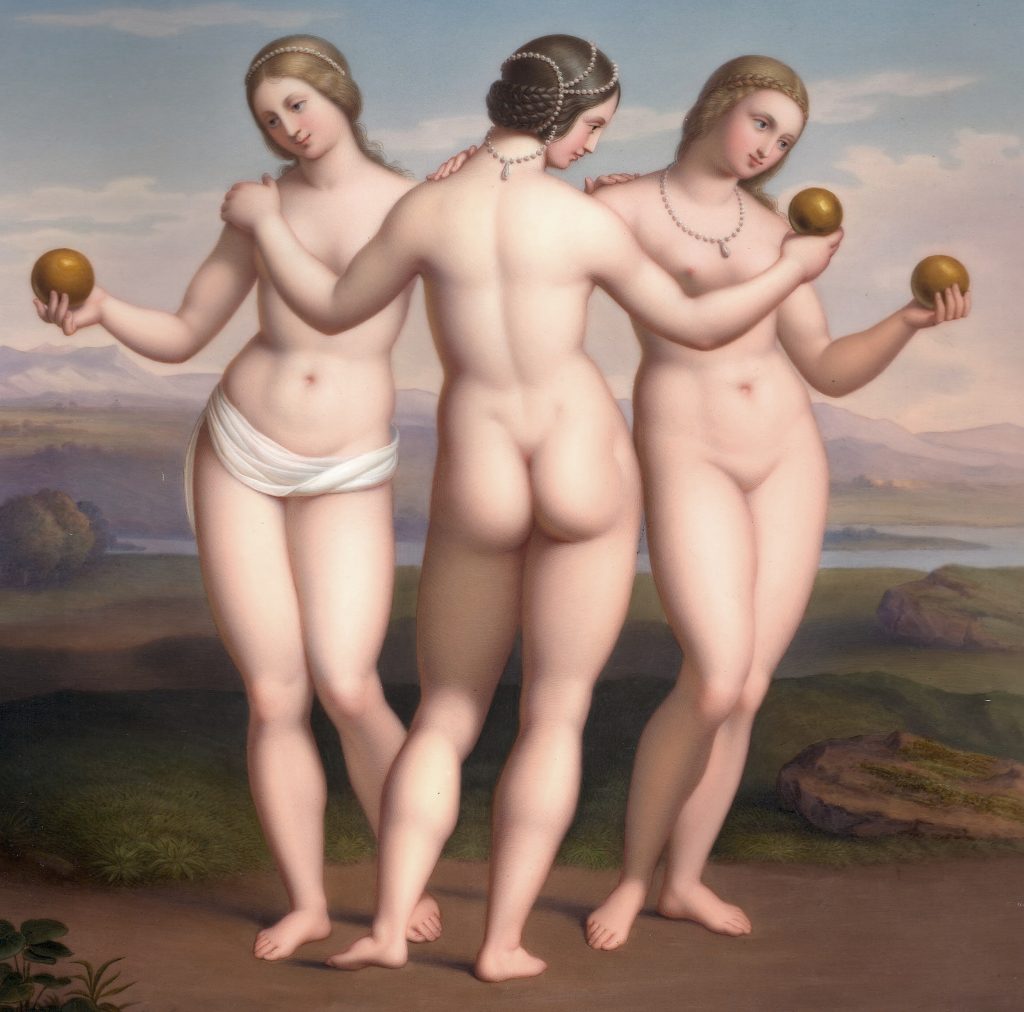
For the first time on-line it is possible to compare on this website, a version painted on porcelain of the Three Graces of Marie Victoire Jaquotot inspired by Raphael's version, who in turn took inspiration from works dating back to the roman era. To be able to enter in narrow friendship the original tablet on which Raffaello painted in Renaissance adequacy the symbolic motive of three Graces, the painter Jaquotot found the opportunity to create her personal interpretation of the grace, beauty and kindness, in the sense and the time of that classicism of the first decades of 1800, in which she lived. With her art, the meticulous painting on porcelain reached a level of perfection remained unsurpassed in the European history of the art of ceramics. Very much hired by "Sèvres" in Paris and with her own atelier and a school of painting, Marie Victoire Jaquotot is already living from the honours received from the rulers and even praise from European royal houses. On her excellent work, refer to the “Revue Encyclopédique“ and other periodicals, art, comments, and publications also abroad of eminent art historians, as well as in the important “Nagler - Lexikon“, ed. 1838, pages 480 and 481.
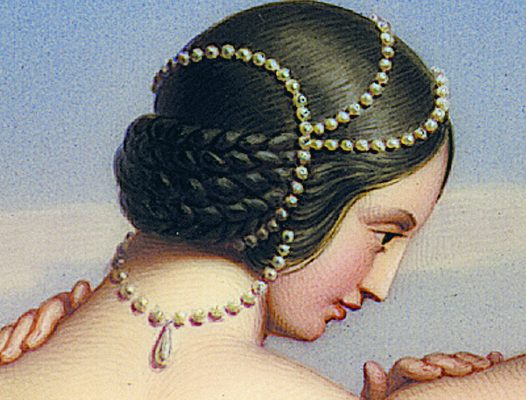
Especially known for her reproductions on porcelain of the works of Raphael and other great artists, her work in this area is in great demand although it is known that, in certain parts of the motive to be copied, she spontaneously makes minor improvements and corrections, and also adds some details that she believes are important to show. When completed & appreciated, the work she copied appears as if the original had been freed from the veil of old varnishes.

Only by a direct comparison with the image of the Graces painted by Raphael, it can be seen that the modifications in the Jaquotot are pondered, ingenious, of significant symbolic relevance. Immediately it is noticeable how the arid place has turned into a mild environment where Aglaia, Euphrosyne and Thalia, in perfect feminine beauty are preparing, with one hand on the shoulder of the other, to dance. Each one holds in her hand the fruit with the magical golden colour, that attracts their gaze. The prodigious gift, that Venus has meant to those who deserve it, and that is offered by his aides.

In a stunning way, Jaquotot managed the execution in vitreous colors, even when mixed with own recipes, of this symbolic image. The harmony and the game of the diffuse light of Raffaello is present, within which the scene takes also place between the real and the fantastic. The Mediterranean fluvial landscape of late summer, becomes green, and also the blue sky goes into a light Ultramarine where clouds signal a world devoid of drought. With its unparalleled mastery in painting with special brush strokes the complexion, so difficult to decide with colours to enamel, Jaquotot manages to paint in a stupendous way in all its delicate nuances, the natural naked juvenile beauty of the Graces.
Marie Victoire Jaquotot
Marie-Victoire Jaquotot
With the virtuous hand required for miniature work Marie-Victoire Jaquotot paints and edit in extraordinary fine execution, the adornement of the Graces. They, too, as in Raphael, are adorned with jewels offered by the sea, element of life, but instead of red corals, they carry necklaces of candescent pearls, for millennia a symbol of love, […]
Interesting details
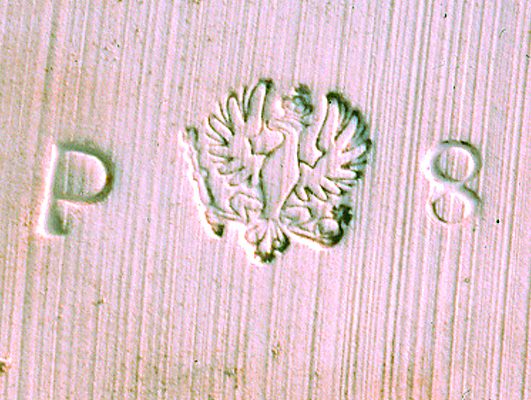
The porcelain plate measures 23.2 cm in width and 21.5 cm in height. On the glazed surface the motif is not centrally painted, and measures 17.5 cm x 20 cm. On the back, positioned between the letter “P” and the digit “8” (8 ounces) is the crowned eagle with sceptre and the sphere in the […]
Art on porcelain
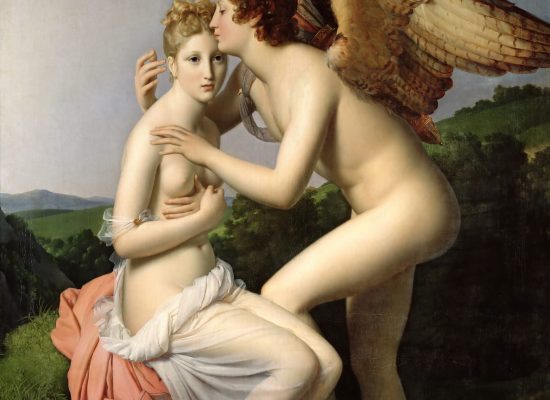
For those who love porcelain art and find moments of joy in admiring what is painted on this medium, a beautiful allegorical interpretation that embodies the grace, beauty and kindness: you should be aware of the existence of this extraordinary version of the Three Graces, which remained unknown in the world of porcelain art until about ten […]
The 3 Graces in Arts
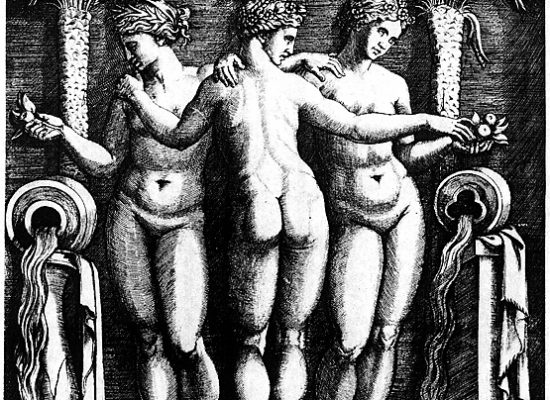
The allegory of gratitude in 2 millennia
The mythological theme of the Three Graces, combined with the iconography of Venus / Venere, was always a fountain of inspiration to artists – painters, sculptors and craftsmen – whose works are introduced with the invention of the printing press in several copies on sheets of paper. The most excellent in reproducing works of art […]
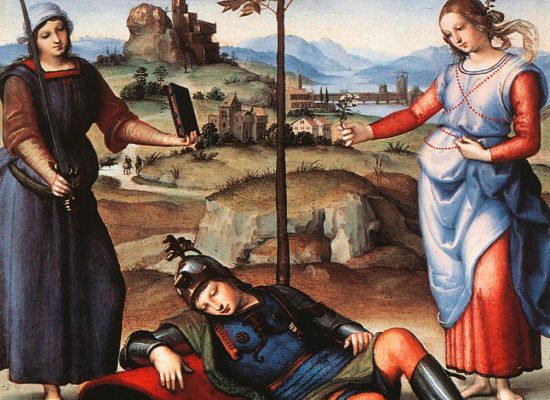
The allegorical diptych of Rafael
The “Three Graces” and “Knight’s Dream”, painted by renaissance artist Rafael (Raffaello Sanzio) in the form of a diptych likely to be placed in the front of a chest, were commissioned by the family on the feast of the confirmation of Scipione di Tommaso of Borghese (1493-1563). A gift as an exhortation to face and […]
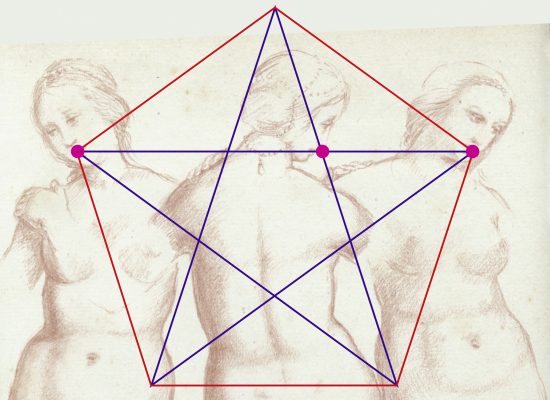
Of divine proportions
Since 1823 the Allegory of the “Three Graces” was part many italian art works which went to enrich renowned British collections, as those who had the opportunity to see the original paintings respectfully admired what was ascertained to be the authentic work drawn by the hand of the great Raphael. But the principle of concealing […]